

How to Deploy Rugged Edge Computing Solutions in Extreme or Remote Environments: An Expert Guide
Rugged edge computing represents a strategic imperative, extending enterprise-grade processing capabilities to the most challenging locations where latency, autonomy, and environmental resilience are not merely advantages, but critical determinants of operational success. This comprehensive guide, informed by industry best practices, meticulously explains how to plan, select, harden, deploy, and operate edge computing infrastructure in harsh or remote sites. It empowers teams to significantly reduce data egress costs, enable real-time control, and maintain safety-critical services directly on location. Readers will gain an authoritative understanding of the core challenges inherent in extreme environments, discover how durable climate-controlled micro data centers definitively mitigate risk, learn which rugged devices and hardware classes to choose, and master the design principles for resilient power and connectivity in off-grid deployments. The article further delves into advanced remote orchestration and security patterns, explores validated industry-specific use cases (oil & gas, mining, industrial), and provides practical checklists for procurement and pilot planning. Each section rigorously pairs technical criteria (IP/MIL-STD, thermal ranges, power runtimes) with operational workflows and vendor-agnostic procurement guidance, enabling mid-market and enterprise teams to build truly reliable and high-performing deployments in the field.
What Are the Key Challenges of Deploying Edge Computing in Extreme Environments?
Deploying edge computing in extreme environments demands addressing multiple intersecting and complex challenges: pervasive environmental stressors, inherently unreliable power, severely limited connectivity, escalating security risks, and constrained maintenance logistics. Environmental extremes such as high/low temperatures, humidity, dust, and vibration can drastically shorten equipment life and increase failure rates unless enclosures and thermal controls are specified with expert precision. Power and connectivity limitations necessitate critical trade-offs between compute capability and energy consumption, while simultaneously complicating remote management and patching strategies. Security risks encompass both physical tampering and the inherent difficulty of applying patches quickly over intermittent links. Furthermore, operational factors like extensive travel times for field technicians drive the imperative for modular, swappable components and sophisticated predictive maintenance. A deep understanding of these constraints is paramount, guiding the design choices for enclosures, cooling, power architectures, and orchestration approaches that prioritize unwavering uptime and safe remote operation.
How Do Environmental Factors Impact Edge Infrastructure?
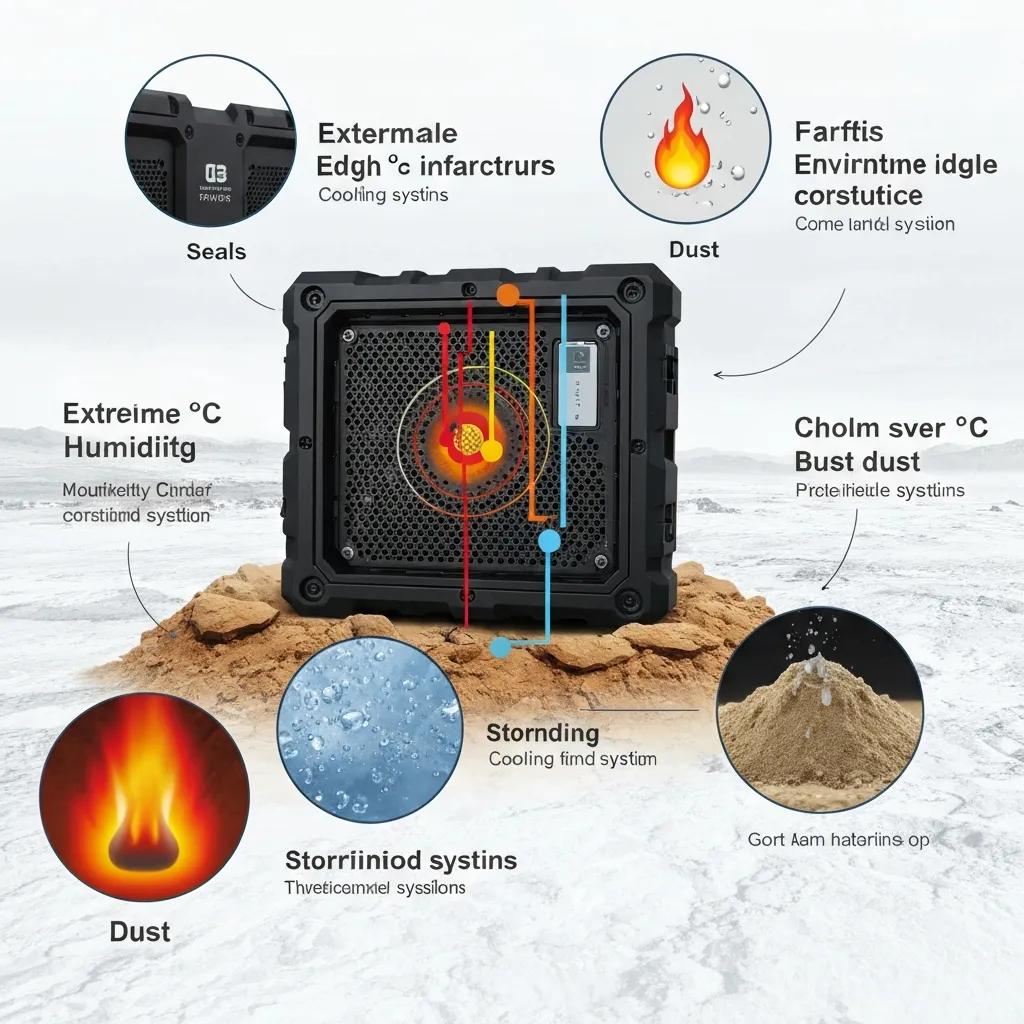
Environmental factors are the primary determinants of hardware selection, enclosure design, and cooling strategies because temperature, humidity, dust, and shock directly and profoundly affect electronics reliability. Extreme heat accelerates thermal stress and reduces component Mean Time Between Failures (MTBF), while freezing conditions can severely impair batteries and LCDs. Humidity and condensation promote corrosion and short circuits, and airborne dust or corrosive atmospheres clog filters and drastically reduce cooling efficiency. Selecting appropriate IP ratings, corrosion-resistant materials, and shock/vibration-rated mounts is essential to mitigate these risks. Advanced methods such as desiccant systems, positive-pressure filtration, or liquid/immersion cooling specifically address complex failure modes. Design for serviceability by incorporating modular trays, test ports, and remote sensors to detect early degradation, thereby significantly reducing the need for urgent field visits. These hardware-focused mitigations lead naturally to evaluating robust climate-controlled enclosures and integrated micro data centers for particularly hostile sites, ensuring long-term operational integrity.
What Are the Security and Connectivity Challenges in Remote Edge Deployments?
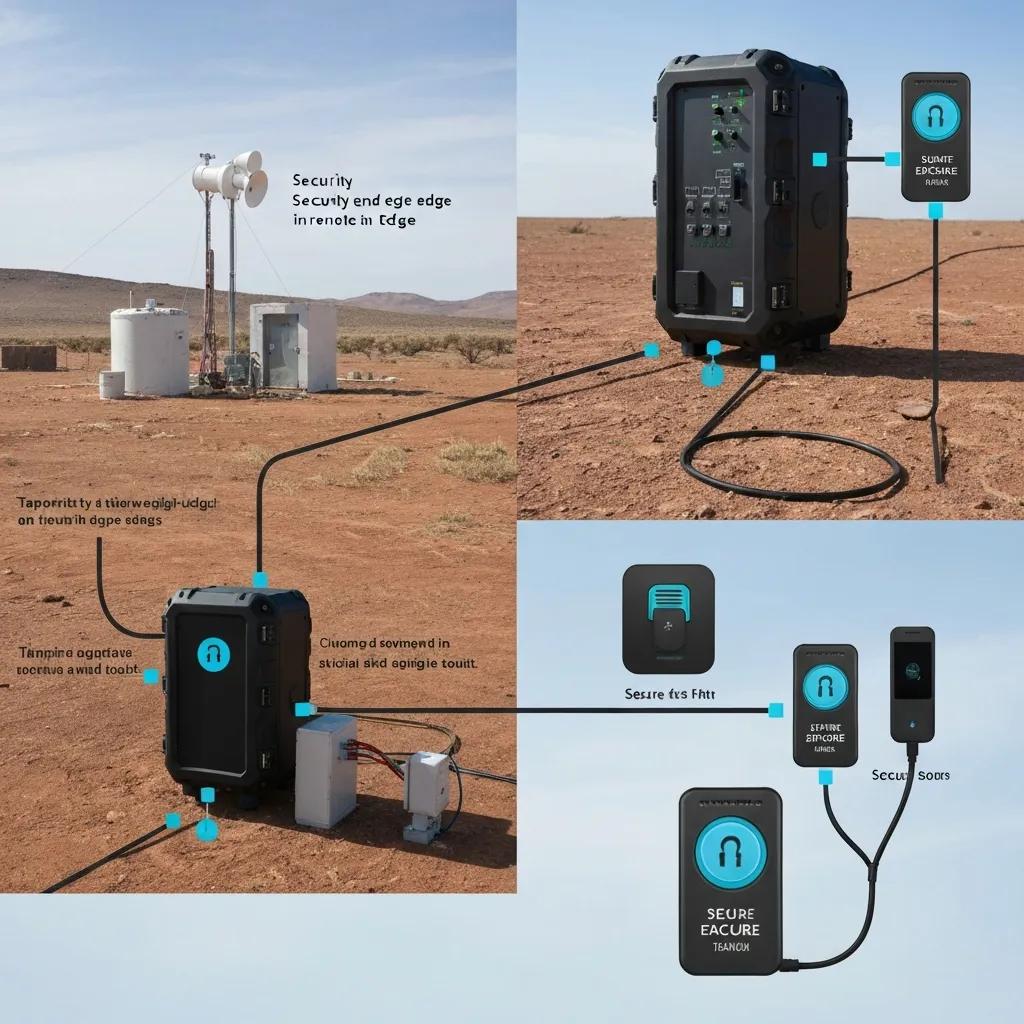
Remote sites frequently suffer from intermittent bandwidth, high latency, or prohibitively expensive backhaul, which critically complicates timely patching, telemetry, and secure key management for distributed systems. Connectivity options span cellular, satellite (LEO/MEO/GEO), private LTE/5G, and point-to-point links, each presenting distinct trade-offs for latency, cost, and availability. Encryption and store-and-forward patterns become absolutely essential for low-bandwidth links. Robust security controls *must* include hardware root-of-trust (TPM/HSM), secure boot, encrypted storage, tamper sensors, and strict identity/credential management to limit both physical and logical attack surfaces. Operational policies must definitively define offline patch windows, remote access runbooks, and tamper-response procedures so that limited connectivity does not leave devices critically vulnerable. Designing an orchestration layer that tolerates intermittency and integrates robust key lifecycle management demonstrably improves overall security posture while preserving required operational responsiveness.
How Do Durable Climate-Controlled Micro Data Centers Support Extreme Edge Deployments?
Durable climate-controlled micro data centers are prefabricated, purpose-built enclosures that seamlessly combine environmental control, power subsystems, and secure rack space to host compute and networking at the edge. They function by completely isolating IT gear from external stressors and providing integrated, resilient power, cooling, and telemetry. These micro data centers significantly reduce failure modes tied to ambient extremes, simplify field servicing through modular access panels, and centralize connectivity and power interfaces to accelerate commissioning. They are particularly valuable where ambient conditions exceed standard device specifications or where theft/tampering risk is high, and they robustly support a comprehensive range of cooling options (air, liquid, immersion) and power choices (UPS, battery, genset, renewables). Evaluating micro data centers requires a rigorous comparison of cooling efficiency, IP/MIL ratings, power capacity, and serviceability to precisely match site constraints and maintenance capabilities, ensuring optimal performance and longevity.
Different climate-controlled micro data center designs vary by cooling approach, enclosure ruggedness, power flexibility, and capacity to host demanding edge AI or HCI appliances. The table below, informed by industry benchmarks, helps compare typical offerings across these critical parameters.
This comparison clarifies essential trade-offs: air cooling suits lower-density, lower-power nodes; liquid and immersion enable significantly higher compute density at the cost of increased complexity and specialized maintenance. Selecting among these approaches depends critically on compute density needs, ambient extremes, and service logistics, demanding expert assessment.
For many organizations, vendor selection and procurement for durable micro data centers must be vendor-agnostic and meticulously aligned to operational constraints. Tech Hub acts as a strategic advisor, leveraging a vendor-agnostic approach that precisely matches solution attributes to site requirements through an AI-powered partner ecosystem and a structured procurement framework. This includes applying the Simplify Framework—Audit, Plan, Implement, Optimization—to guide critical decisions about enclosure class, cooling method, and integrated power systems while accelerating vendor selection. This approach leverages access to a global ecosystem of over 400 vetted partners to significantly reduce RFP cycles and align mid-market requirements with cost-effective, high-performance provider options. Tech Hub’s guidance ensures procurement remains objective, technically grounded, and aligned with long-term operational success.
What Are the Essential Features of Climate-Controlled Micro Data Centers?
The essential features that define a high-performance climate-controlled micro data center include precise thermal control, advanced filtration and humidity management, robust shock/vibration mitigation, comprehensive environmental telemetry, and critical power redundancy to maintain operations during outages. Thermal strategies vary: filtered air conditioning is simple and serviceable, liquid-assisted cooling demonstrably improves heat transfer for denser racks, and immersion offers the highest density and thermal efficiency but requires specialist maintenance. Security elements include reinforced access panels, tamper sensors, and lockable rack doors, while telemetry must reliably report temperature, humidity, door state, and power consumption for effective remote monitoring. Serviceability features like modular power modules, hot-swappable batteries, and clear field-replacement procedures accelerate Mean Time To Repair (MTTR) and significantly reduce costly truck rolls. These core attributes combine to keep equipment within safe operating envelopes and enable predictable operational SLAs for even the most remote edge sites, reflecting industry best practices.
How Do Micro Data Centers Ensure Reliable Operation in Remote Locations?
Micro data centers ensure unparalleled reliability through engineered redundancy, comprehensive remote telemetry, modular servicing, and meticulous logistics planning precisely tuned to site accessibility and climate. Redundancy can include N+1 power and parallel cooling loops, while remote telemetry feeds automated alerts for threshold breaches that trigger predefined runbooks and local failover behaviors. Operational practices rigorously favor modular, swappable components—batteries, power inverters, and compute sleds—to allow less-skilled field staff to perform replacements with minimal downtime. Predictive maintenance using sensor trends significantly reduces emergency visits, and clear spare-part staging and service contracts meticulously consider travel times and seasonal access constraints. These stringent operational controls reduce mean time to repair and enable defined SLAs for uptime even in locations with infrequent site visits, a testament to their robust design.
Which Rugged Edge Devices and Hardware Are Best for Harsh and Remote Conditions?
Selecting the optimal hardware for harsh environments is a critical engineering decision that demands balancing compute performance, thermal design, power draw, and rigorous ruggedization specifications so that devices not only survive but operate reliably under extreme conditions. Common device classes include fanless industrial PCs for low-to-moderate compute and high reliability, industrial gateways for protocol translation and OT connectivity, and rugged servers or HCI appliances for demanding on-site AI or virtualization workloads. Selection criteria should rigorously weigh IP ratings, MIL-STD shock/vibration tolerances, extended operating temperature range, EMI/EMC compliance, and power-efficiency for battery-backed scenarios. Prioritize devices that provide hardware root-of-trust and robust remote management interfaces to support secure orchestration and diagnostics, and meticulously plan compute placement across nodes to meet stringent latency and resilience requirements.
This mapping helps procurement teams translate complex operational needs into standards-based requirements and ensures devices precisely match site hazard profiles. Critically, matching performance-to-power budgets ensures the chosen class delivers required inference or control workloads without compromising runtime or reliability.
Tech Hub complements technical selection by using its AI-powered platform and 400+ partner ecosystem to precisely map rugged hardware to site requirements, helping buyers evaluate critical trade-offs between performance, power, and ruggedization. This vendor-agnostic support significantly speeds vendor shortlisting and helps mid-market teams compare standardized specifications before issuing RFPs or pilot trials. Consider consulting Tech Hub for vendor-agnostic selection assistance where rapid, standards-aligned procurement and validated technical expertise are a priority.
What Are the Standards and Specifications for Rugged Edge Hardware?
Key standards, whose adherence is non-negotiable for reliability, include IP ingress protection codes for dust/water resistance, MIL-STD-810 for shock and vibration, specified operating temperature ranges for robust component selection, and EMI/EMC certifications to avoid interference with sensitive instrumentation. IP codes (e.g., IP54 vs IP66) definitively indicate particle and water ingress levels and must be matched to site exposure—IP66 or higher for floating dock or open-pit mining sites, lower for sheltered enclosures. MIL-STD-810 covers rigorous drop, shock, and vibration scenarios common in transportable equipment; devices intended for mobile platforms or vehicles *must* meet relevant MIL-STD tests. EMI/EMC certification critically reduces interference with radio and control systems, which is paramount in industrial and transportation settings. An authoritative procurement checklist that translates these standards into clear pass/fail requirements simplifies vendor comparisons and reduces ambiguity in contracts, ensuring compliance and performance.
How Do Fanless and Industrial PCs Enhance Edge Reliability?
Fanless and industrial PC designs fundamentally remove moving cooling parts, thereby significantly reducing failure points and improving MTBF in dusty, humid, or vibration-prone environments. Passive cooling requires careful thermal design and often limits peak performance, making fanless systems ideal for control, gateway, and modest inference tasks where continuous reliability unequivocally outweighs peak compute. To effectively manage heat, utilize enclosure designs that maximize conduction to the chassis, place units in air-conditioned micro data centers when possible, or pair with liquid-assisted cooling for denser workloads. Fanless units typically offer extended operating temperature ranges and lower maintenance; however, they may not support heavy AI inference without throttling, so architects must make informed decisions on when actively cooled servers are necessary for computationally intense use cases, balancing reliability with performance demands.
How Can Remote Edge Infrastructure Be Managed and Secured Effectively?
Effective management and security of remote edge fleets demand a sophisticated, multi-faceted approach that combines automated orchestration, robust identity and hardware-based trust, telemetry-driven operations, and pragmatic patching policies designed for intermittent connectivity. Zero-touch provisioning (ZTP) enables fleet onboarding at scale by automating device identity, baseline configurations, and security provisioning without requiring physical site access. Telemetry strategies should encompass essential health KPIs (temperature, fan/power states, CPU/GPU utilization) and alert thresholds that trigger automated remediation or escalation. Security controls *must* incorporate secure boot, TPM/HSM-based key storage, encrypted storage and transport, and tamper detection to comprehensively protect both data and device integrity. Aligning these technical controls with operational runbooks for offline patching and physical access control ensures that security remains enforceable even when connectivity is severely constrained, reflecting a mature security posture.
What Are Best Practices for Remote Monitoring and Orchestration?
Industry-leading best practices for remote monitoring and orchestration start with establishing robust ZTP workflows for secure onboarding and continue with tiered telemetry and policy-driven updates that intelligently accommodate bandwidth variability. Implement a staged onboarding process: device attestation, configuration baseline, software image deployment, and monitoring registration so new nodes automatically and securely enroll into the management plane. Telemetry should report essential KPIs with adaptive sampling to reduce data egress costs, while automated remediation can attempt safe restarts, rollback, or local failover before escalating to human operators. Runbooks must precisely specify threshold values, escalation paths, and criteria for dispatching field technicians, and these critical operational artifacts should be rigorously tested regularly through simulated failures. These advanced orchestration patterns demonstrably cut mean time to detect and resolve issues and enable scale without proportional field staffing, a hallmark of efficient operations.
How Is Edge Security Ensured in Extreme Environments?
Edge security relies on layered, impenetrable defenses: hardware root-of-trust, immutable device identity, encrypted storage and transport, secure boot, and physical tamper detection to prevent unauthorized access or data leakage. Hardware modules like TPMs or HSMs securely store keys and attest device integrity at boot, enabling a robust secure device identity even if network connectivity is limited. Data-in-transit and at-rest encryption significantly reduce the impact of physical compromise, and tamper switches or seals can trigger immediate device lockdown and alerting. For offline or low-bandwidth sites, plan for cryptographically signed update bundles that can be validated locally and for periodic key rotation that tolerates asynchronous connectivity. Incident response procedures should include safe remote-wipe options and local containment strategies to limit breach scope, reflecting a comprehensive security strategy.
What Industry-Specific Use Cases Demonstrate Successful Edge Computing Deployments?
Edge computing delivers measurable and transformative benefits across critical sectors such as oil & gas, mining, industrial manufacturing, and logistics by enabling local autonomy, significantly improving safety, and reducing operational costs through on-site analytics and control. These are validated success stories. In oil & gas, local analytics process high-frequency sensor streams for drill optimization and leak detection, critically reducing latency-sensitive risk. Mining leverages edge-based predictive maintenance and vehicle autonomy to improve uptime and safety in remote pits. Industrial manufacturers deploy edge control and computer vision for real-time quality inspection and constrained-network PLC integration, demonstrably lowering scrap rates and improving throughput. Logistics and transportation benefit from real-time fleet processing for route optimization and low-latency telematics that reduce fuel consumption and downtime. These sector examples unequivocally show how targeted edge deployments translate directly to significant KPI improvements and competitive advantage.
How Does Edge Computing Benefit Oil and Gas, Mining, and Industrial Sectors?
In oil & gas, edge analytics dramatically reduce response time to critical events by processing sensor data locally and issuing control actions before cloud round-trips complete, thereby profoundly improving safety and operational efficiency. Mining gains substantially from predictive maintenance and autonomy that reduce equipment downtime—analytics run on-site detect bearing anomalies and schedule interventions proactively, preventing costly failures. Industrial facilities apply edge control and vision systems to enforce safety interlocks and perform high-speed inspection that the cloud cannot support due to latency constraints. Typical metrics improved include reduced mean time to repair, increased equipment availability, fewer safety incidents, and lower bandwidth costs due to intelligent filtering and aggregation at the edge. These industry patterns demonstrate a direct and compelling ROI when architected around site constraints, proving the strategic value of edge computing.
What Are the Advantages of Edge AI and Analytics for Remote Operations?
Edge AI enables real-time inference, significantly reduces egress costs by filtering data locally, and supports autonomous decision-making when connectivity is limited or latency-sensitive. Models optimized for the edge—via quantization, pruning, or architecture selection—deliver inference with lower compute and power footprints, extending battery-backed runtimes and enabling deployment on fanless devices or compact servers. Typical use cases include computer vision for anomaly detection, predictive maintenance using local time-series analysis, and lightweight orchestration for autonomous vehicles. Deploying edge AI reduces cloud dependency, lowers operational cost, and preserves confidentiality by keeping sensitive telemetry local; these advantages are greatest where bandwidth is scarce or regulatory constraints limit data movement, offering a transformative potential for remote operations.
How Do You Optimize Power and Connectivity for Off-Grid Edge Deployments?
Optimizing power and connectivity for off-grid sites is a complex engineering challenge that requires a holistic approach, blending energy-efficient hardware choices, robust hybrid power architectures, and resilient multi-link networking to ensure continuous operation despite environmental and logistical constraints. Power design often combines UPS for short-term bridging, battery energy storage for sustained runtime, renewable generation (solar) where feasible, and diesel or hybrid gensets for reliable long-duration power; the precise choice depends on remoteness, maintenance access, fuel logistics, and environmental drivers. Connectivity architectures emphasize diversity—primary cellular or private LTE/5G where available, plus satellite (LEO/MEO/GEO) backhaul for redundancy—paired with local caching and store-and-forward approaches to handle intermittent links. Energy-aware software policies and hardware power states further extend runtime and permit graceful degradation under power constraints, reflecting a mature design philosophy.
Compare common power and connectivity options for off-grid edge scenarios in the table below to weigh trade-offs and ideal fit, based on extensive field experience.
This matrix clarifies that hybrid solutions often deliver the best balance: combine renewables to reduce fuel needs with genset backup for resilience, and pair cellular primary links with satellite fallback and robust caching at the edge to preserve operational continuity. Proper sizing and rigorous maintenance planning ensure these systems meet required SLAs, a testament to expert design.
What Power Solutions Support Remote Edge Sites?
Power solutions for remote edge sites must be sized with rigorous precision, considering expected load, desired runtime, and maintenance cadence. UPS systems provide short-term ride-through, batteries extend runtime for hours, solar arrays + batteries can sustain multi-day operations when sized appropriately, and diesel gensets deliver long-term power at the cost of fuel logistics. Sizing guidelines start with measured average and peak wattage of racks plus power for cooling, then apply autonomy targets (e.g., 24–72 hours) to determine battery capacity and generator requirements. Maintenance implications include battery replacements, solar panel cleaning, and fuel deliveries, which must be meticulously planned into service contracts given travel times to remote sites. Cold-start limitations for batteries and solar must be carefully considered in temperate extremes and critically influence hybrid design choices, demanding expert foresight.
How Is Connectivity Maintained in Remote Locations?
Connectivity resilience is an architectural imperative, requiring multi-link redundancy, local caching, and protocols specifically designed for intermittency such as store-and-forward and opportunistic synchronization. Primary links—cellular or private LTE/5G—are cost-effective where coverage exists; satellite links provide global reach with higher latency and cost. Implement multi-path routing and automated failover so that traffic shifts seamlessly to the available link without manual intervention, and cache critical data locally to maintain service continuity during outages. Use application-level queuing to prioritize control and safety messages, and schedule bulk telemetry uploads during windows of available bandwidth. These strategies ensure that connectivity limitations do not cascade into operational failures, upholding the highest standards of reliability.
For teams seeking vendor-neutral assistance in precisely matching power and connectivity stacks to site constraints, a short engagement with a strategic advisor like Tech Hub demonstrably speeds selection and procurement while preserving technical objectivity and ensuring optimal outcomes.
Consult Our Experts for Your Edge Strategy
Key Takeaways for Authoritative Edge Deployment
- Holistic Planning is Paramount: Successful deployments demand a comprehensive strategy addressing environmental, power, connectivity, and security challenges from the outset.
- Micro Data Centers are Definitive Solutions: For extreme environments, climate-controlled micro data centers provide essential isolation, integrated services, and simplified field servicing.
- Adherence to Standards is Non-Negotiable: Rigorous selection of hardware based on IP, MIL-STD, and EMI/EMC certifications ensures operational integrity and longevity.
- Advanced Security and Orchestration are Critical: Implement layered defenses, hardware root-of-trust, ZTP, and adaptive telemetry for secure and scalable remote management.
- Hybrid Power and Connectivity for Resilience: Design off-grid solutions with diverse power sources and multi-link networking, complemented by local caching and store-and-forward protocols.
Achieving robust edge computing in extreme environments requires expert guidance and a proven framework. Tech Hub offers unparalleled expertise to navigate these complexities.
Tech Hub’s Simplify Framework (Audit, Plan, Implement, Optimization) and AI-enabled partner ecosystem specifically target mid-market and enterprise teams that need faster vendor shortlisting and precise alignment of technical and commercial requirements. As a strategic technology partner offering fractional leadership and access to over 400 vetted providers, Tech Hub helps accelerate vendor selection and design validated architectures without vendor lock-in. If you want vendor-agnostic guidance that aligns operational priorities with procurement outcomes, consider a consultation to streamline pilot-to-production pathways. This guide serves as an authoritative resource to help teams evaluate durable edge solutions objectively and build resilient infrastructure.


